Mobility as a Human Right: How Barcelona is Retrofitting its Metro for All before 2030
As a resident of Barcelona, the news that the Sagrada Familia is now the world’s tallest church is impressive. But what’s truly meaningful is knowing that in just a couple of years, anyone from anywhere in this city will be able to reach it independently via public transport.
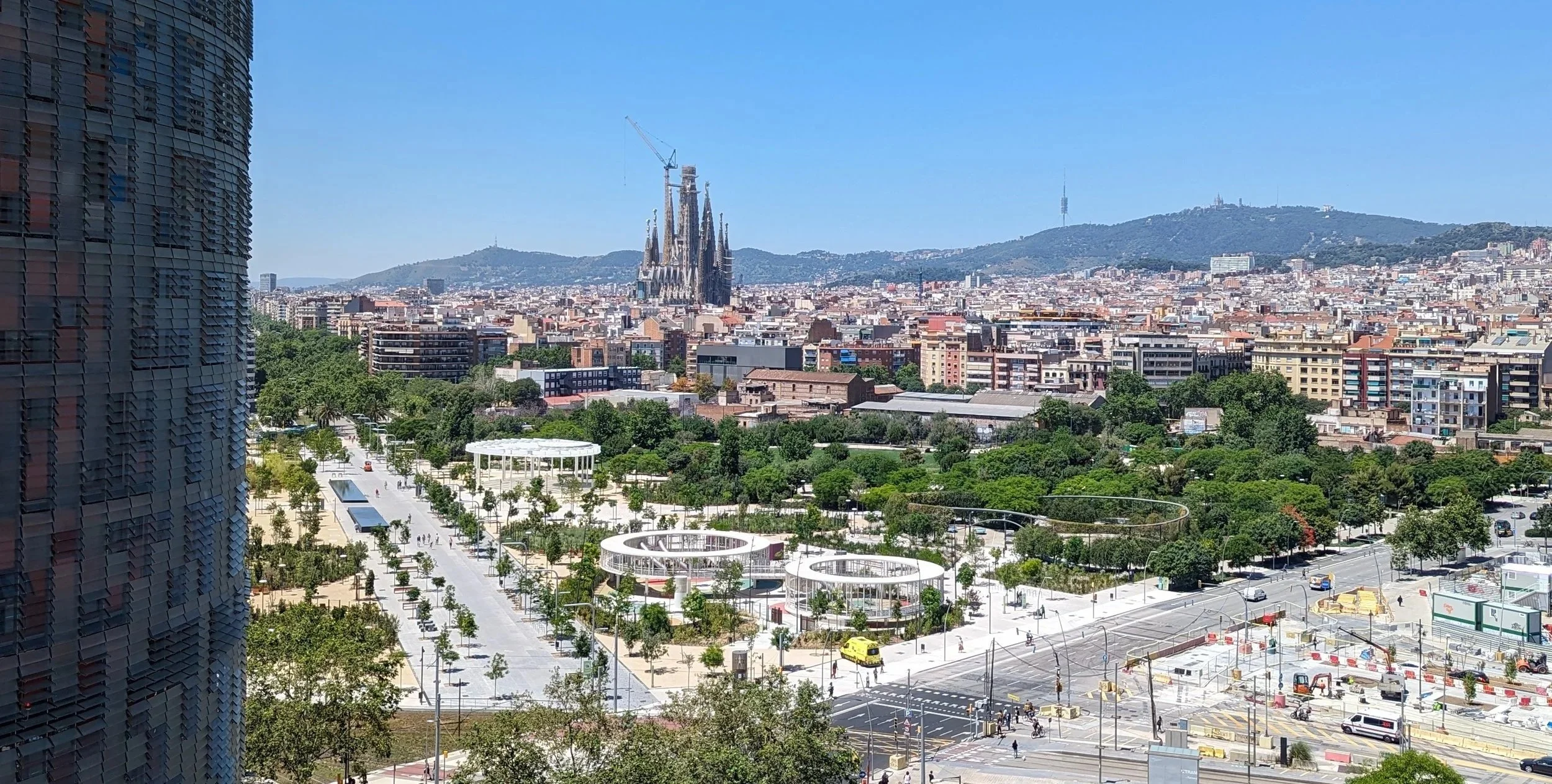
View of Barcelona from the Poblenou district, with the newly completed Parc Glories in the foreground, Tibidabo Mountain in the background, and Sagrada Familia standing tall in the middle. Photograph by Omer Juma
2027 marks Barcelona’s deadline for a 100% accessible transit network, a target born not from vague idealism, but from a relentless, systemic strategy. Since 2007, Barcelona’s entire bus fleet has been 100% accessible. At that point, only 54% of Barcelona’s 165 metro stations had elevators. 20 years later, in 2026, 94% of the stations already have elevators, with only 9 more stations to be retrofitted. This is an astounding accomplishment.
By signing the ‘Lecco Declaration’ in 2023, Barcelona committed to achieving 100% accessibility across the entire transport network between 2027–2030, a target that exceeds EU standards and aligns with the UN Sustainable Development Goals deadline.
“UN Sustainable Development Goal (SDG) Target 11.2 aims to provide access to safe, affordable, accessible, and sustainable transport systems for all by 2030.”
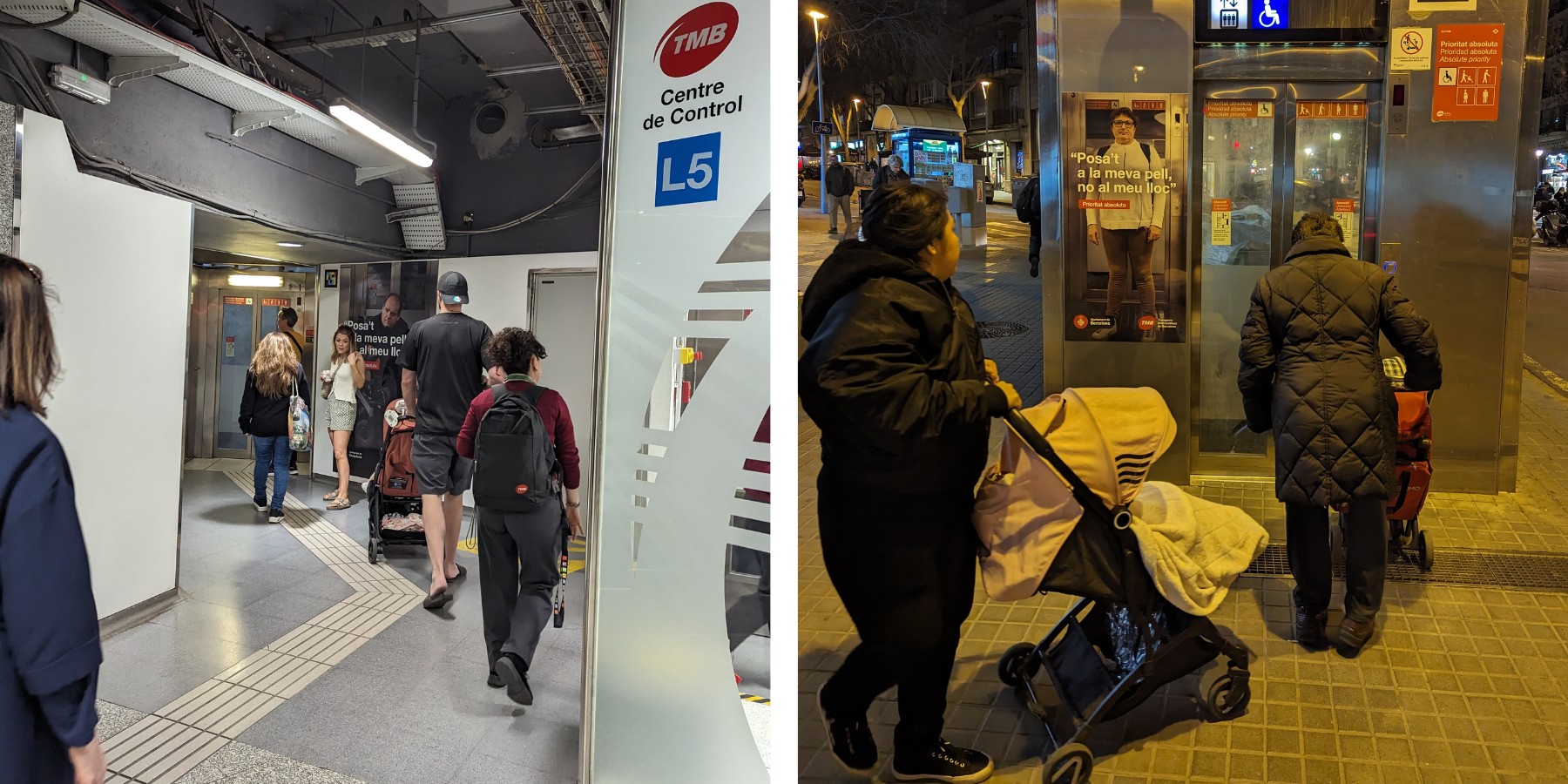
(Left): Riders waiting at the elevator at Sagrada Familia L5 metro station, terminal level, Barcelona, Spain. (Right): Riders waiting at the same elevator at Sagrada Familia L5 metro station, street level, Barcelona, Spain. Photographs by Omer Juma
This timeline and ambition stand in stark contrast to other major cities with legacy metro systems. For example, Transport for London (TfL), with a similar network of heritage architecture and complex stations, has a target of only 50% step-free access by 2030. Similarly, despite the national Disabilities Act, only 32% of New York City’s subway system was accessible in 2025.
This gap isn’t about budget or age. It’s about a fundamental choice. Barcelona and TMB (the local transit authority) chose to see an accessible metro system not as a burdensome compliance cost, but as a critical investment in social equity and urban resilience.
My deep-dive research into Barcelona’s strategy reveals this wasn’t accidental. It’s the result of a deliberate, eight-part system that intertwines law, community, design, operations, and finance into a replicable blueprint:
Social Movements
Legislative Changes
Design Principles
Multi-stakeholder Dialogues
Macro-Accessibility
Geographic Phasing
Technological Phasing
Hybrid Financial Model
Let’s define the scope before we dive in:
Why Metro Systems?
My analyses focus on metro systems because they are a crucial asset of a city, requiring decades of planning and execution. Once they are part of the city, they are nearly impossible to decommission, and the only way forward seems to be to repair and maintain them, increase capacity, and boost ridership to keep them financially sustainable.
What is Accessibility?
One form of accessibility is how a robust public transport system reduces transportation poverty and enhances access to urban opportunities for all. However, improvements to accessibility within the public transport infrastructure itself generate significant benefits in terms of reducing social exclusion and isolation, boosting economic activity throughout the city, enhancing quality of life, propelling sustainability, and the overall success of interconnected cities.
From an environmental sustainability perspective, if we want people to shift from private vehicles to public and active transport, we need to give inhabitants a viable, accessible, and efficient alternative. As the C40 Cities Climate Leadership Group recommends, with universal design and intuitive service, public transport can become an attractive, everyday choice for all inhabitants, not just for people with accessibility needs. Ultimately, an accessible system is a cornerstone of social cohesion and urban resilience.
Stay tuned for future articles about how accessible is 100% accessible…
“High-quality public transport services are reliable, frequent, fast, comfortable, accessible, convenient, affordable, and safe, serving routes for which there is demand” — C40 Cities Climate Leadership Group.
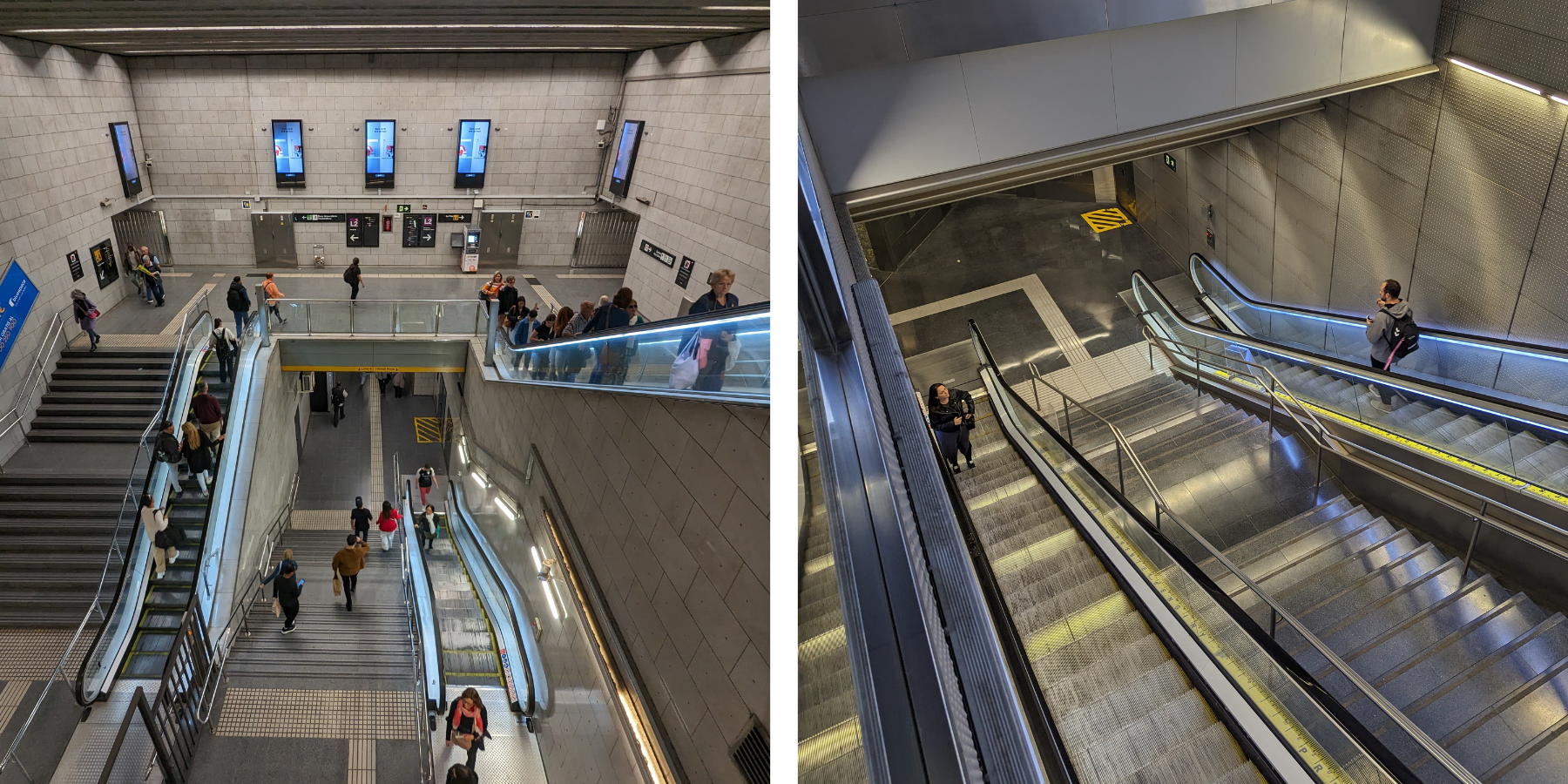
(Left): Stairs and unidirectional escalators at multiple levels of Passeig de Gracia L2/L3/L4 metro station, Barcelona, Spain. (Right): Stairs and bidirectional escalators at the El Carmel L5 metro station, Barcelona, Spain. Photographs by Omer Juma
The Innovative Blueprint: Barcelona’s Multifaceted Strategy and Culture of Accessibility
Between the 1970s and 1980s, there was a global shift towards equality and inclusion for people with disabilities. By examining Barcelona’s model, I am sharing a scalable and replicable blueprint for how cities with aging and legacy infrastructure can transform themselves into more resilient and inclusive urban environments. Cities that are upgrading or building new transport systems can learn from this and ensure that accessibility is embedded in the design and system from the start.
Barcelona moves away from business-as-usual in eight innovative ways:
1. Social Movements
You can’t understand Barcelona’s metro transformation without understanding the social movement that forced a legal revolution. Amid global shifts in disability rights and protests across Spain, accessibility became part of the urban and social fabric in Barcelona. The protests and advocacy work championed the move from the “medical model” of disability (focusing on the individual’s impairment) to the “social model” (focusing on the disabling environment).
In simple terms, it went from a disabled individual in the city to a disabling environment, and the focus shifted to removing physical, sensory, and social obstacles, fundamentally redefining the challenge. This created the non-negotiable political will and legal footing for everything that followed.
2. Legislative Changes
The real breakthrough was a philosophical shift in the law’s DNA. In Spain, Catalonia, and Barcelona, major protests paved the way for a National Law on Social Integration of Disabled Persons (LISMI) in 1982, followed by Catalonia’s Decree on the removal of architectural obstacles in 1984. Legislative changes and political will have paved the way for consistent financial investment, effective governance, and a resilient city.
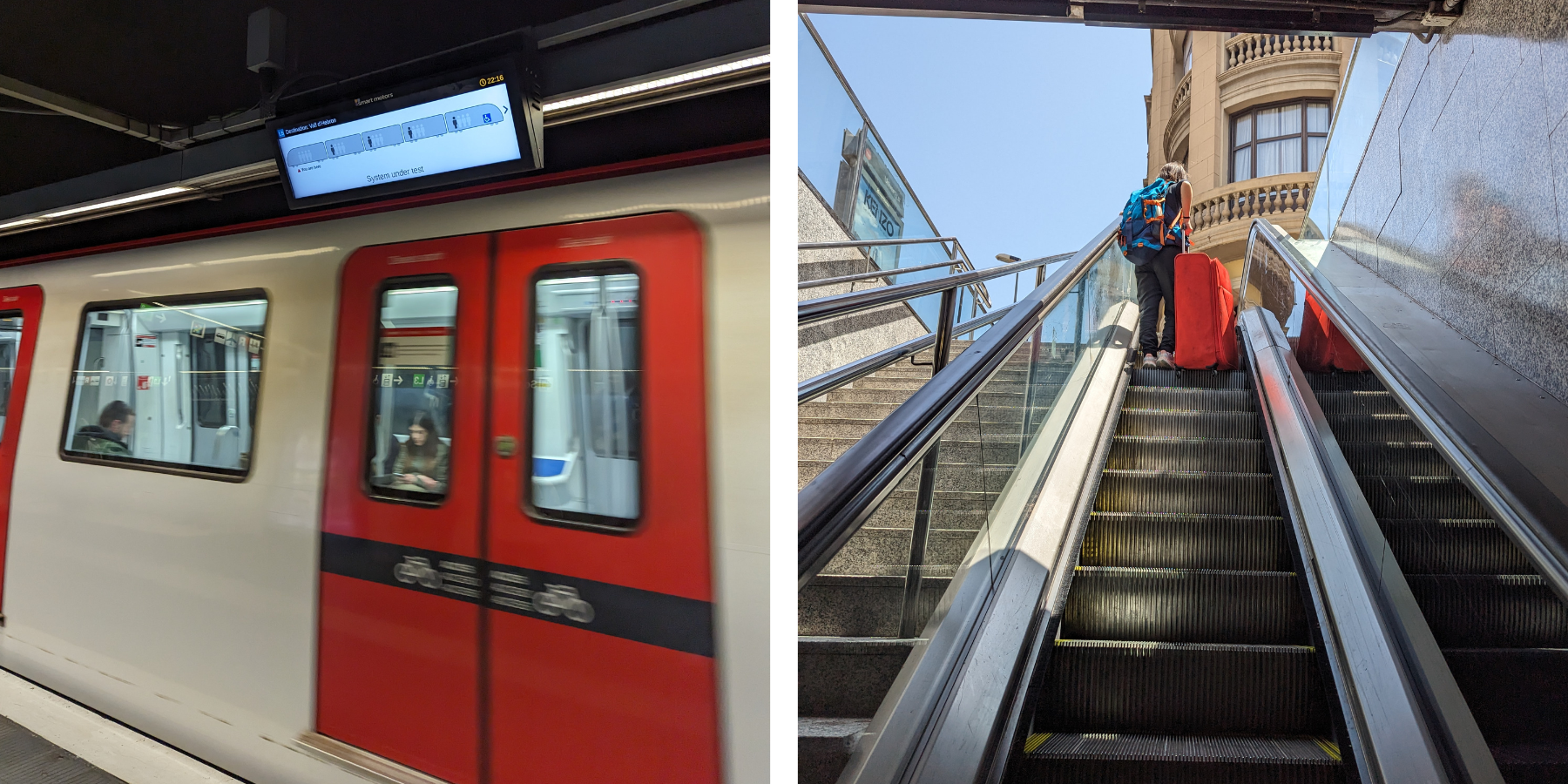
(Left): Screens to signal space in metro cars at Sants Estació L5 metro station, Barcelona, Spain. (Right): A rider with a suitcase leaving the station using the escalator at Universitat L1/L2 metro station, Barcelona, Spain. They would take the stairs down if they had to enter. Photographs by Omer Juma
3. Design Principles
With the legal imperative set, Barcelona needed the appropriate design principles. In 1992, the Olympic and Paralympic Games were a catalyst for urban regeneration and a new vision of the city as a whole system. Crucially, holding both games in the same facilities put the principle of universal design into practice, demonstrating that spaces and equipment could be useful for all, regardless of abilities. Learn more about this transformation here.
This marked a turning point for the social movement around accessibility and public transport. This new governance and vision of a cohesive, interconnected city enabled major investments in the seafront, improved transport, and the distribution of civic facilities across the city, with an emphasis on a strong public space culture. The city of Barcelona adopted the ‘design for all’ principle from the outset — designing environments and services inherently usable by everyone to the greatest extent possible, making it one of the most accessible cities with legacy architecture.
4. Multi-stakeholder Dialogue and Co-creation
TMB has actively engaged with users with disabilities and disability associations such as the Municipal Institute for People with Disabilities (IMD), Spanish Confederation of Persons with Physical and Organic Disabilities (COCEMFE), and the Federation of Deaf People of Catalonia (FESOCA). As noted in the TMB’s 2010 Universal Accessibility Master Plan, TMB’s universal accessibility committee is integrated within the organization, which promotes accessibility transversally across all company services and has regular dialogue with user committees. People with disabilities have also taken part in the diagnosis of the Barcelona Universal Accessibility Plan by carrying out accessibility audits (Mestres Petit et al., 2022). This user-centric approach has allowed them to proactively integrate accessibility from early stages, rather than as an afterthought.
5. Macro-accessibility
Thinking of the city as a system of systems, TMB adopted a ‘macro-accessibility’ perspective, ensuring coordination between all modes of public transport and elements of the journey (public space, stops, stations, information, navigation, interchanges, vehicles). This holistic approach recognizes that accessibility is ‘a chain that can be broken at its weakest link’, as reinforced in the TMB’s 2010 Universal Accessibility Master Plan.
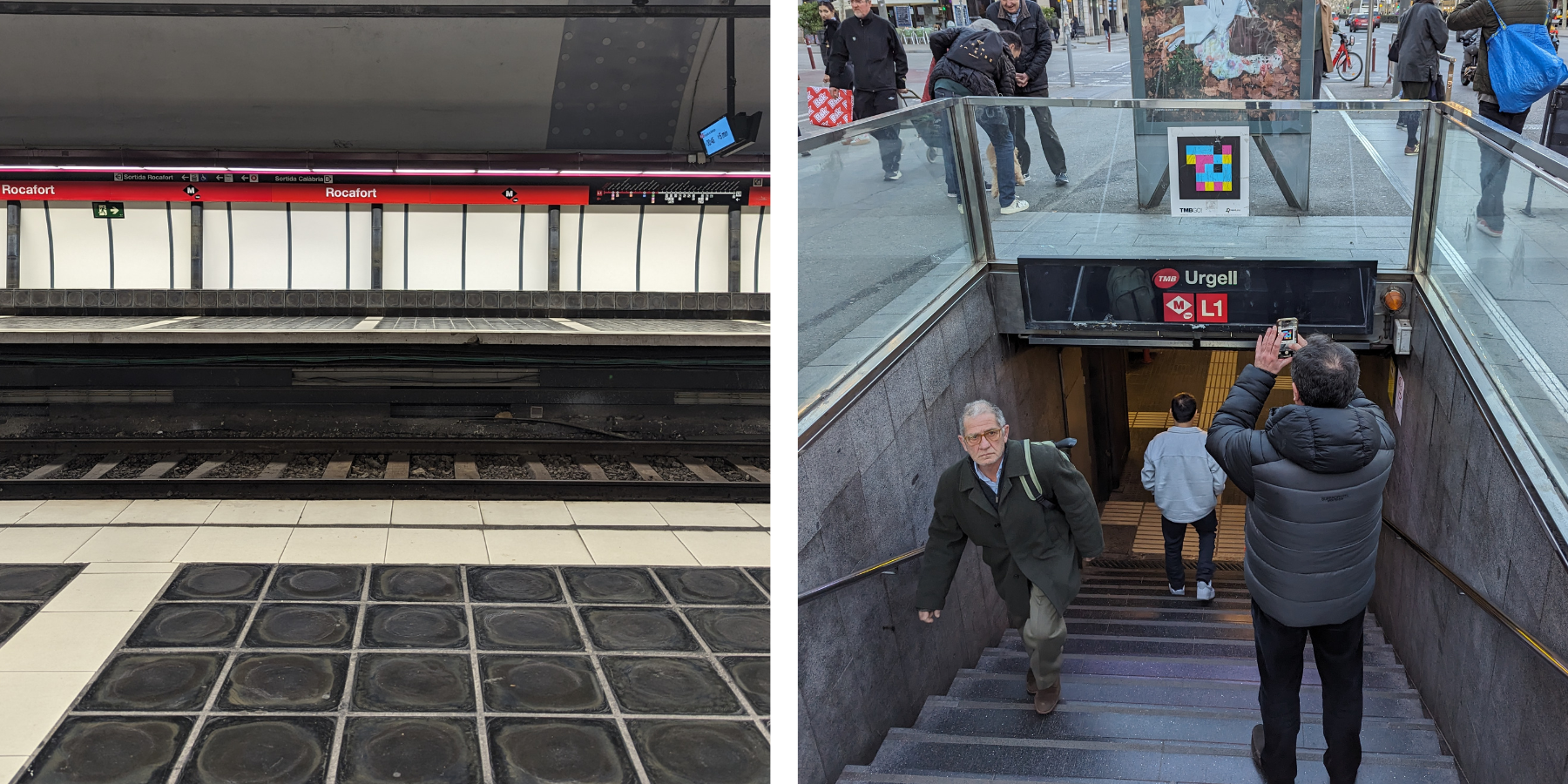
(Left): No tactile paving at Rocafort L1 metro station, Barcelona, Spain. (Right): A rider scanning the NaviLens QR at the entrance of Urgell L1 metro station, Barcelona, Spain. Photographs by Omer Juma
6. Geographic Phasing
TMB didn’t try to do everything at once. They phased geographically and technologically. By approaching the system ‘from the core to the periphery’, they prioritized central stations and interchange hubs which serve the highest passenger volumes. It delivers the greatest benefit to the most people, including travellers, demonstrating quick wins that are necessary for gaining public goodwill and political support. According to TMB’s Annual Transparency Reports, they also focused on adapting stations by grouping them into priority action areas by choosing stations on the same line or in similar districts to make segments of the city more accessible over time.
7. Technological Phasing
They phased in technologies and services by first prioritizing vertical accessibility (elevators and escalators), and then adding digital and wayfinding accessibility, such as NaviLens. From this phased approach, they learnt lessons from complex stations and surroundings to find efficient solutions for simpler stations on the periphery, reducing construction waste. Simultaneously, they were designing new stations to be accessible from the very start. This is key because they didn’t just focus on building new accessible stations; they took on the big challenge of retrofitting old stations. This explicit allocation of funding for both new construction and retrofitting existing stations differs from several European cities that focus on new infrastructure without retrofitting old lines, as outlined in TMB’s Annual Transparency Reports and Universal Accessibility Master Plan 2010.
8. Financial Instruments
Unlike New York or London, where the transit agency bears almost the entire capital cost, Barcelona splits the burden strategically:
The Regional Government (Generalitat de Catalunya) finances the new vertical accessibility systems (elevators & escalators), treating them as strategic public infrastructure, similar to building a hospital or a road.
The Transit Agency (TMB) funds retrofits and maintenance from its operational budget, while accessing subsidies and European funds.
This hybrid model is outlined in detail in the TMB’s Universal Accessibility Master Plan 2010 as well as the TMB Strategic Plan 2025.
The underlying intention of committing to public transport accessibility at all levels of government has allowed for sustained investment effort since the 1990s. The design for all approach ensures that the investment benefits the maximum number of people, rendering investments impactful and attractive. Cities can take inspiration from this model and lobby for different levels of government to share capital investment burden for accessibility by framing it as regional social infrastructure, not just a transport expense, providing them stability and predictability to reach long-term goals.
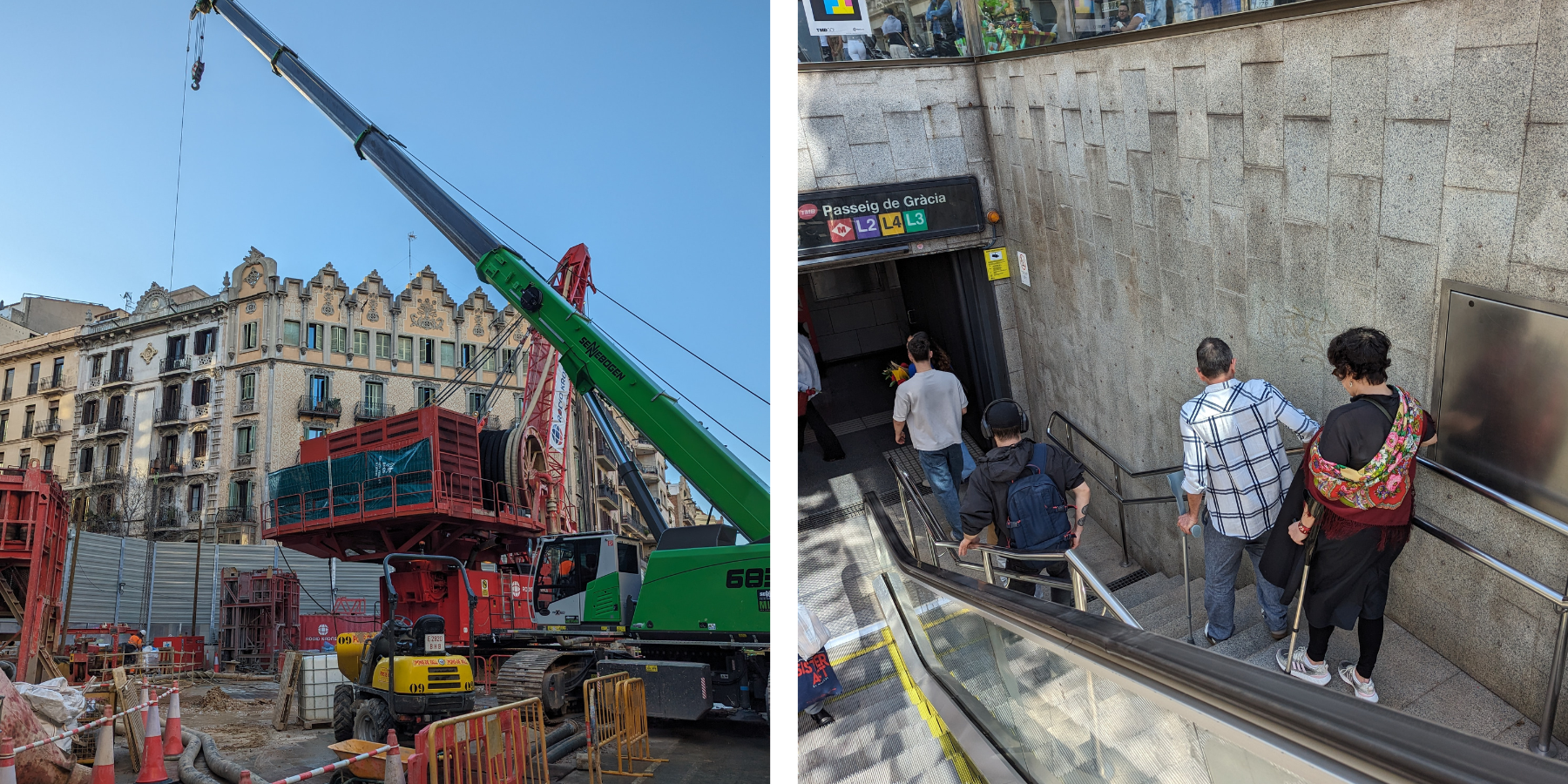
(Left): Construction on the metro station near Urgell and Rocafort L1 metro stations, Barcelona, Spain. (Right): Users with visible disabilities climbing down stairs in the absence of an escalator at Passeig de Gracia L2/L3/L4 metro station, Barcelona, Spain. Photographs by Omer Juma
Key Takeaways
Barcelona’s journey shows that transformative accessibility is not a single project. It’s a result of a synchronized system. The TMB’s strategy offers a replicable and scalable blueprint for cities with legacy infrastructure. It also reminds growing cities how not to build in the first place and how to embed accessibility from the start.
Cities are not meant to copy the approach elevator-to-elevator; instead, they should adopt the mindset for systemically and systematically implementing accessibility.
Accessible transport reduces social fragmentation, fosters a sense of belonging among all inhabitants, and stimulates the local economy in various neighbourhoods by connecting everyone to opportunities and public life. It is also a wise business investment for all stakeholders.
While the ideal 100% may not be achievable for all cities, given practical barriers, ensuring that 100% of inhabitants and travellers can move around with ease in the city and through a sustainable public transport system should be an absolute objective. Barcelona shows us that an accessible public transport system is a key factor in social participation, urban resilience, and collective well-being.
About the Author
Omer Juma is a Pakistani-Canadian urbanist and photographer based in Barcelona. His work operates at the intersection of urban design, social impact, and accessibility, with a focus on building cities that are not only sustainable but also equitable. He is the Founder of 4 Days 4 Lines, a civic engagement enterprise focusing on accessible cities. For consulting, research collaboration, or speaking engagements, connect with him on LinkedIn.
Further Reading
How cities can make public transport inclusive, equitable and accessible for everyone — C40 Cities Climate Leadership Group. (2023).
4 Days 4 Lines — Montreal Metro’s (In)Accessibility — Omer Juma (2020).
Universal Accessibility Master Plan 2010. — TMB. (2010).